Why Aussies Keep Buying ACV (and Why the Format Matters)
Walk down the vitamin aisle at Chemist Warehouse or your local Coles and you’ll see the evidence: Australians have fallen hard for apple cider vinegar.
It’s on the shelves in every form imaginable — liquid, capsules, gummies, powders, shots. ACV has been a folk wellness favourite for decades, long before it was a supplement ingredient. The acetic acid it contains (around 5% in the vinegar itself) is the compound tied to its reputation, along with trace polyphenols from the apples.
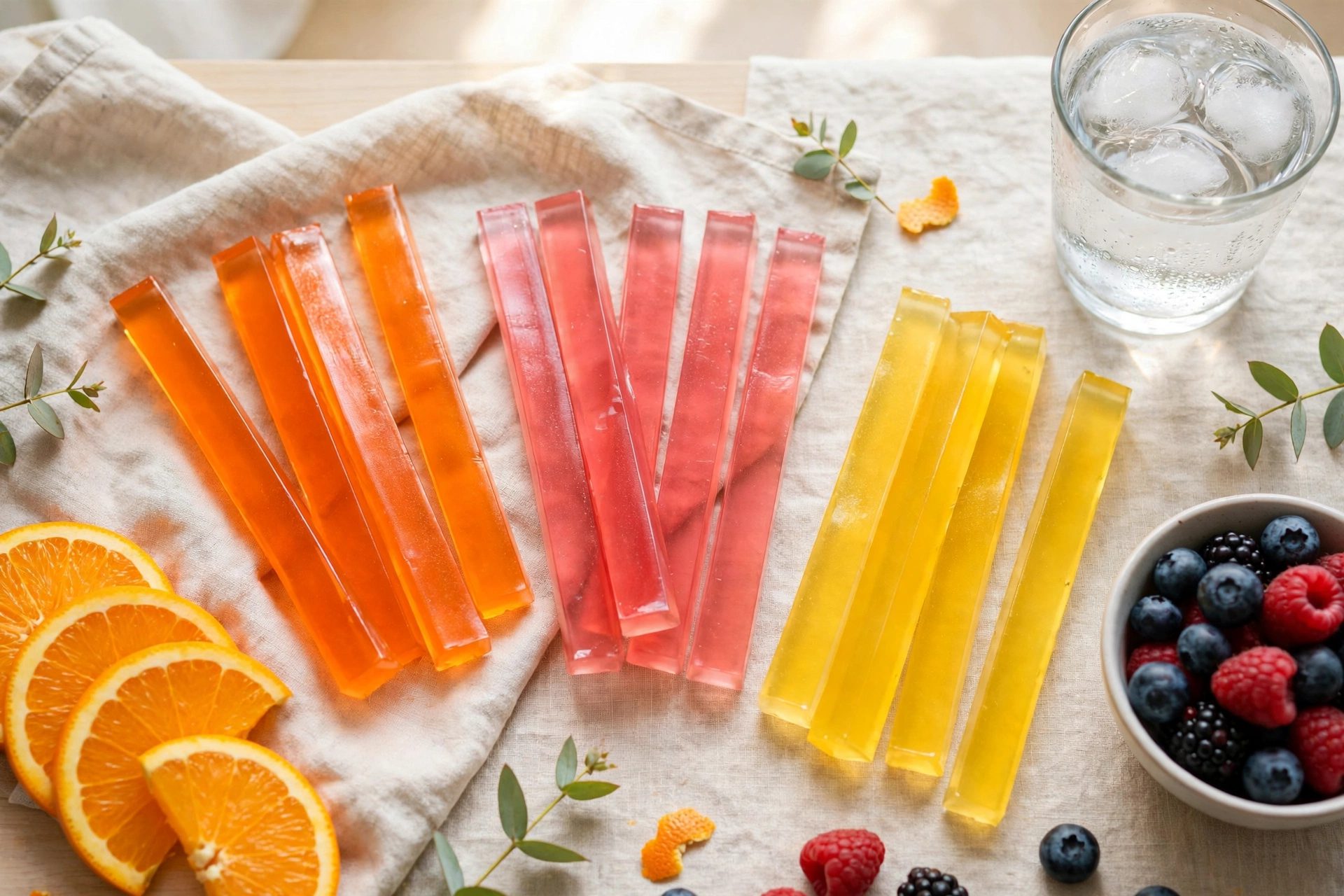
But here’s the thing every Aussie who’s tried the liquid knows: drinking vinegar straight is awful. It burns, it stinks up the kitchen, and it’s rough on your teeth. That delivery problem is the entire reason products like JellyThin exist. The jelly stick is an answer to a very Australian complaint: “reckon I’d take ACV if it didn’t taste like punishment.”
So the ingredient story starts with a simple pitch: the ACV everyone’s curious about, without the burn, the smell, or the enamel worries. Whether the dose does much is a separate question — we’ll get to that — but the format logic is sound.
Apple Cider Vinegar: What It Actually Is
The basics
Apple cider vinegar is fermented apple juice — yeast converts the fruit sugars to alcohol, then bacteria convert that alcohol to acetic acid. That’s the whole recipe. What you buy at Woolworths in a bottle is the same fundamental product your grandmother used in salad dressing; the supplement industry just dresses it up.
Why it lands in weight-management products
ACV’s weight-management reputation comes from small human studies on vinegar consumption and feelings of fullness, plus a mountain of anecdotal reports. The proposed mechanisms are modest and mechanical: acetic acid may slow the rate food leaves the stomach (which can increase satiety), and it may blunt post-meal blood sugar spikes a touch.
Here’s the honest framing: these are small effects observed in small studies, mostly using liquid vinegar in much larger amounts than fit inside a 525mg jelly blend. There is no strong scientific consensus that ACV, in any form, causes meaningful weight loss on its own. Treat it as a traditional ingredient people enjoy including in their routines — not a fat-burning compound. Anyone who tells you otherwise is selling something.
The dose reality check
Liquid ACV studies typically used 15–30ml of vinegar daily — a volume of acetic acid far beyond what fits in a 525mg combined blend. JellyThin’s 525mg covers ACV plus BHB salts, so the ACV portion is necessarily a fraction of that. This isn’t a criticism unique to JellyThin — it applies to every ACV gummy and jelly on the Australian market. It just means your expectations should be calibrated: the jelly is a habit vehicle for an ingredient people like, not a concentrated therapeutic dose.
BHB Salts: The Keto Half of the Blend
What BHB salts are
BHB stands for beta-hydroxybutyrate — one of the ketone bodies your liver produces when carbohydrate intake is very low, as in a ketogenic diet. “BHB salts” are BHB bound to minerals such as sodium, calcium, or magnesium, which keeps the compound stable in a supplement. They’re the standard active ingredient in virtually every “keto gummy” sold in Australia.
Exogenous ketones (ketones from a supplement rather than from your own fat-burning) are generally used to support the body during low-carb eating — plenty of users say they ease the transition when cutting carbs. What the evidence doesn’t support is BHB supplements melting fat on their own; studies showing meaningful weight loss from exogenous ketones alone are limited.
Why pair BHB with ACV?
It’s a category play, and a sensible one from a product-design standpoint. ACV brings the traditional wellness crowd; BHB brings the keto crowd; the jelly format brings everyone who hates pills. Two of the most-searched weight-management ingredients in one stick. But be clear-eyed: whether the combination outperforms either ingredient alone hasn’t been studied. Treat it as a convenient bundle rather than a synergistic formula.
The 525mg Proprietary Blend: Decoding the Number
A proprietary blend lists the combined weight of a group of ingredients without revealing each one’s individual amount. JellyThin’s 525mg covers the ACV + BHB combination. A few things worth knowing:
- 525mg is a modest dose. Set expectations accordingly — this is a supporting-ingredient level, not a clinical-trial level.
- Blends are industry-standard. Nearly every gummy and jelly supplement uses them. It’s not a red flag by itself.
- Consistency beats concentration. A modest daily dose you actually take beats a “stronger” dose you abandon after a fortnight. That’s the bet this product is making.
- Verify the current label. Formulations change. The official product page carries the current ingredients list — always check before ordering, especially ordering from Australia where shipping takes time.
The Jelly Base: What’s Not on the Active Panel
A jelly needs more than actives — it needs to actually be a jelly. The exact inactive ingredients live on the ingredients panel, but jelly supplements generally contain fruit flavouring, sweeteners, and a gelling agent (like pectin or gelatin) plus water. Two honest notes for Australian readers:
First, check the sugar content on the panel if you’re watching your sugar intake. Flavoured jellies aren’t sugar-free by default, and a “healthy” habit that adds meaningful sugar would be self-defeating. Second, if you follow a specific diet (vegan, halal, gluten-free) or have allergies, verify those details on the official label rather than assuming. Product pages are the source of truth — not third-party reviews, and not a listing on some marketplace site.
Reading Any Supplement Label Like a Sceptic
These five checks will serve you well whether you buy JellyThin or anything off the shelf at Chemist Warehouse.
- Serving size vs. the box: know what one “serving” actually is — one stick, two gummies, whatever the panel says.
- Proprietary blend totals: note the total, and accept you won’t see the individual breakdowns.
- Sugar and calories per serving: the unglamorous numbers that actually matter for weight goals.
- “Other ingredients”: always listed below the actives — this is where sweeteners and fillers hide.
- Contact and guarantee details: a genuine company lists a real way to reach them and a real refund policy. JellyThin’s official page lists a 60-day money-back guarantee.
One Australia-specific tip: products sold at Australian retailers usually carry an AUST L (listed medicine) number from the TGA. Imported products sold direct from overseas websites are handled differently, so don’t expect the same numbering — and if TGA listing matters to you, ask your pharmacist or GP about the product before ordering.
The Bottom Line on Ingredients
JellyThin’s ingredient story is straightforward: ACV + BHB salts in a 525mg blend, delivered as a jelly you’ll actually take. There are no miracle molecules here — and the product isn’t claiming a breakthrough. It’s claiming a better delivery format for ingredients Australians already buy separately. Judge it on that claim: if the format keeps you consistent with a routine built around sensible eating and movement, the ingredients are doing their supporting job. If you’re hunting for something that does the work for you, no ingredients list will satisfy you — because that product doesn’t exist.
#ad — Affiliate link.
Wondering whether the formula translates into anything meaningful? Read Does JellyThin Work? An Honest Look for Australians next — or jump to our full JellyThin review for the complete breakdown.
Frequently Asked Questions
What ingredients are in JellyThin?
Each JellyThin jelly stick centres on a 525mg proprietary blend of apple cider vinegar (ACV) and BHB salts (beta-hydroxybutyrate), in a fruit-flavoured jelly base. The balance of the stick is the delivery system — flavouring and gelling ingredients. For the current full ingredients list, check the official product page before buying.
How much apple cider vinegar is in each JellyThin stick?
The exact ACV amount per stick isn’t published — it’s grouped with BHB salts under the single 525mg proprietary blend figure. Proprietary blends only disclose the combined total, which is common across the supplement industry. If the precise split matters to you, ask the company directly before ordering.
Is JellyThin listed with the TGA in Australia?
JellyThin is sold through its official website, which ships to Australia. Imported supplements are handled differently from TGA-registered listed medicines sold at Chemist Warehouse — check the official page and, if it matters to you, ask your pharmacist or GP about the product’s status before buying.
How much sugar is in a JellyThin jelly stick?
Jelly products are flavoured, so the sugar and calorie count per stick should be checked on the official product page’s Supplement Facts panel. A weight-management habit that adds meaningful sugar would work against your goals, so don’t assume — verify on the label.
Is JellyThin suitable for vegans or people with allergies?
Dietary details like vegan status, gluten content, or allergens should be confirmed on the current official label, as formulations and manufacturing can change. Don’t rely on third-party reviews for allergen information — go straight to the source.
#ad — Affiliate link.